Workplace Analytics: How companies optimize office space using data
Why companies need to re-evaluate their office space
Work environments are changing rapidly. Hybrid work models, flexible attendance, and new requirements for collaboration mean that office spaces are used differently today than they were just a few years ago.
Many companies are therefore facing key questions:
- How heavily are workstations actually being used?
- Which areas are at capacity – and which are sitting empty?
- How many workstations will be needed in the future?
- Which areas foster productivity and collaboration?
A structured workplace analysis provides the data foundation needed to answer these questions and manage office space strategically.
What does workplace analysis mean?
Workplace analysis describes the systematic evaluation of how office space, workstations, and meeting rooms are used. The goal is to make real usage patterns visible and derive optimization measures from them.
Typical areas of analysis include:
- Workstation occupancy
- Meeting room usage
- Team attendance patterns
- Space utilization by location or department
This gives companies transparent insights into their spatial structure, allowing them to make data-driven decisions.
Why space data is becoming increasingly important
Many companies still plan office space based on assumptions or historical structures. However, modern work models are making these planning approaches increasingly inaccurate.
Data-driven analysis allows you to:
- Identify overcapacity
- Restructure space efficiently
- Optimize costs in the long term
- Targeted improvement of work environments
Companies gain planning security and avoid bad investments.
What data workplace analytics provide
Workstation occupancy rates
Companies can see how often workstations are actually used. This helps determine whether desk-sharing concepts make sense or if adjustments are necessary.
Meeting room usage
Meeting rooms are often over- or underutilized. Analytics show:
- which rooms are in high demand
- when bottlenecks occur
- which room sizes are actually needed
Temporal usage patterns
Analytics reveal typical attendance days and peak times. This allows companies to plan space dynamically and avoid overcrowding.
Team and location comparisons
Different departments often use office space in very different ways. Data helps in developing individual solutions for teams.
Benefits of data-driven space planning
Optimized space utilization
Workplace analytics reveal which areas are being used efficiently and where there is potential for optimization. Companies can adjust office layouts in a targeted manner.
Cost control and budget planning
Greater transparency regarding space usage allows for sustainable reductions in rent and operating costs, while simultaneously avoiding unnecessary expansions.
Improved workplace quality
Companies can purposefully enhance work environments by understanding which areas are used most productively.
Supporting hybrid work models
Workplace analytics provide the foundation for effectively managing flexible attendance models and providing workstations based on actual demand.
The role of workplace analytics software
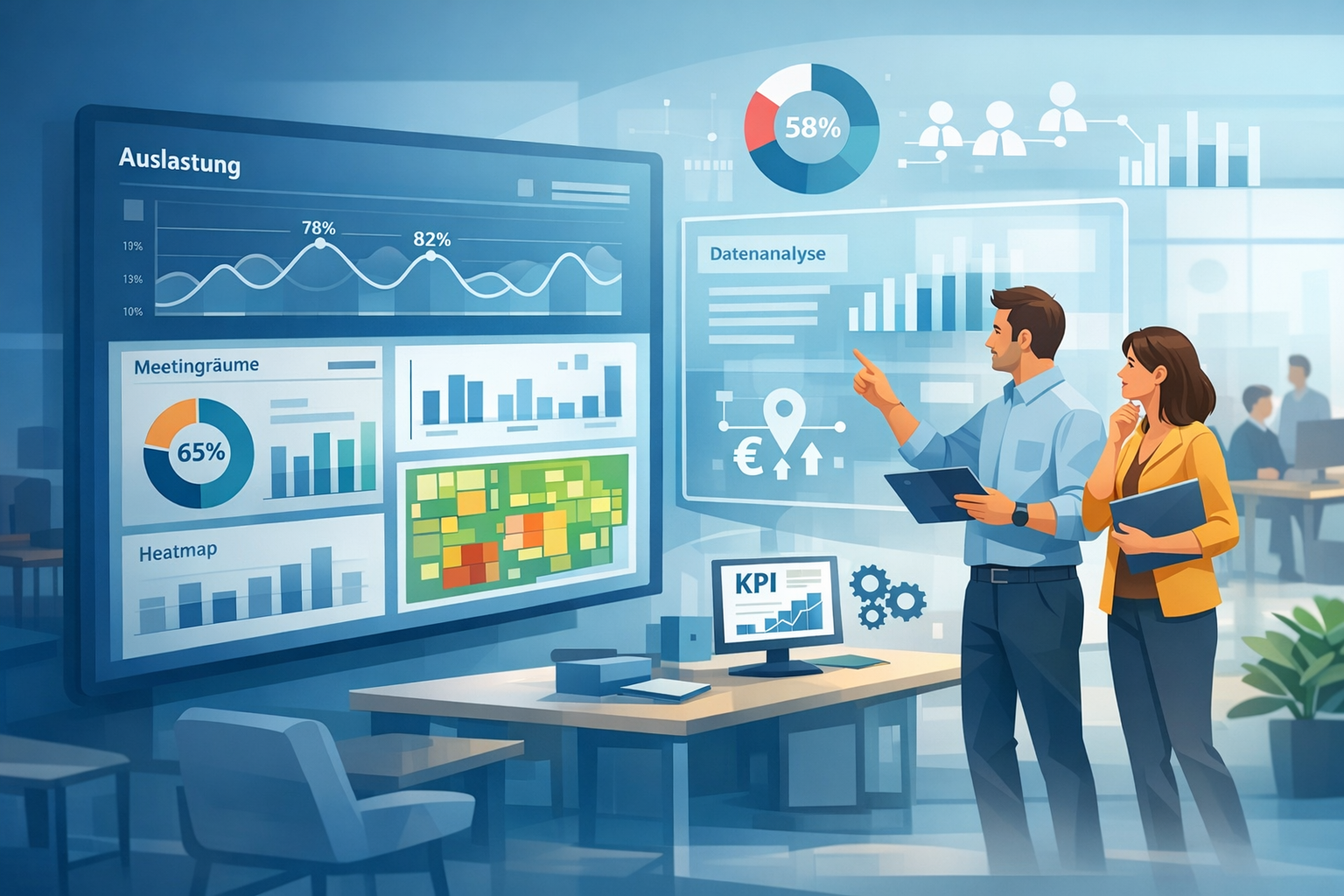
Digital analysis platforms enable the automated evaluation and visual representation of space data.
Typical features include:
- Occupancy dashboards
- Heatmaps for space visualization
- Usage statistics by time period or location
- KPI evaluations for space productivity
- Data exports for reporting and business intelligence
These tools help companies make strategic decisions objectively and transparently.
Workplace analytics as the foundation for modern workplace strategies
Workplace analytics is increasingly becoming part of holistic office planning. Companies use space data for purposes such as:
- Implementing desk sharing
- Planning hybrid work models
- Office space redesign
- Location decisions
- Sustainability strategies
This transforms office planning from a static structure into a dynamic management process.
Implementation challenges
Data protection and transparency
Workplace analyses must be implemented in compliance with data protection regulations. Employees should understand that these analyses are for space optimization, not performance monitoring.
Data interpretation
Data only provides added value when interpreted correctly. Companies need clear objectives and strategies to derive concrete actions from analyses.
Change management
Space optimization often changes work structures. Employees should be actively involved in change processes to ensure acceptance.
The future of office space is data-driven
Workplaces are increasingly evolving into flexible resources. Companies that strategically use space data can react more quickly to changes and create sustainable work environments.
Workplace analytics helps companies use office space efficiently, optimize costs, and simultaneously enable modern ways of working.
Conclusion: Workplace analysis creates planning security
A structured analysis of workplace utilization provides companies with the foundation for informed decision-making. It enables efficient office space design, cost control, and the successful implementation of flexible work models.
Companies that actively use their space data create sustainable and future-proof work environments.